

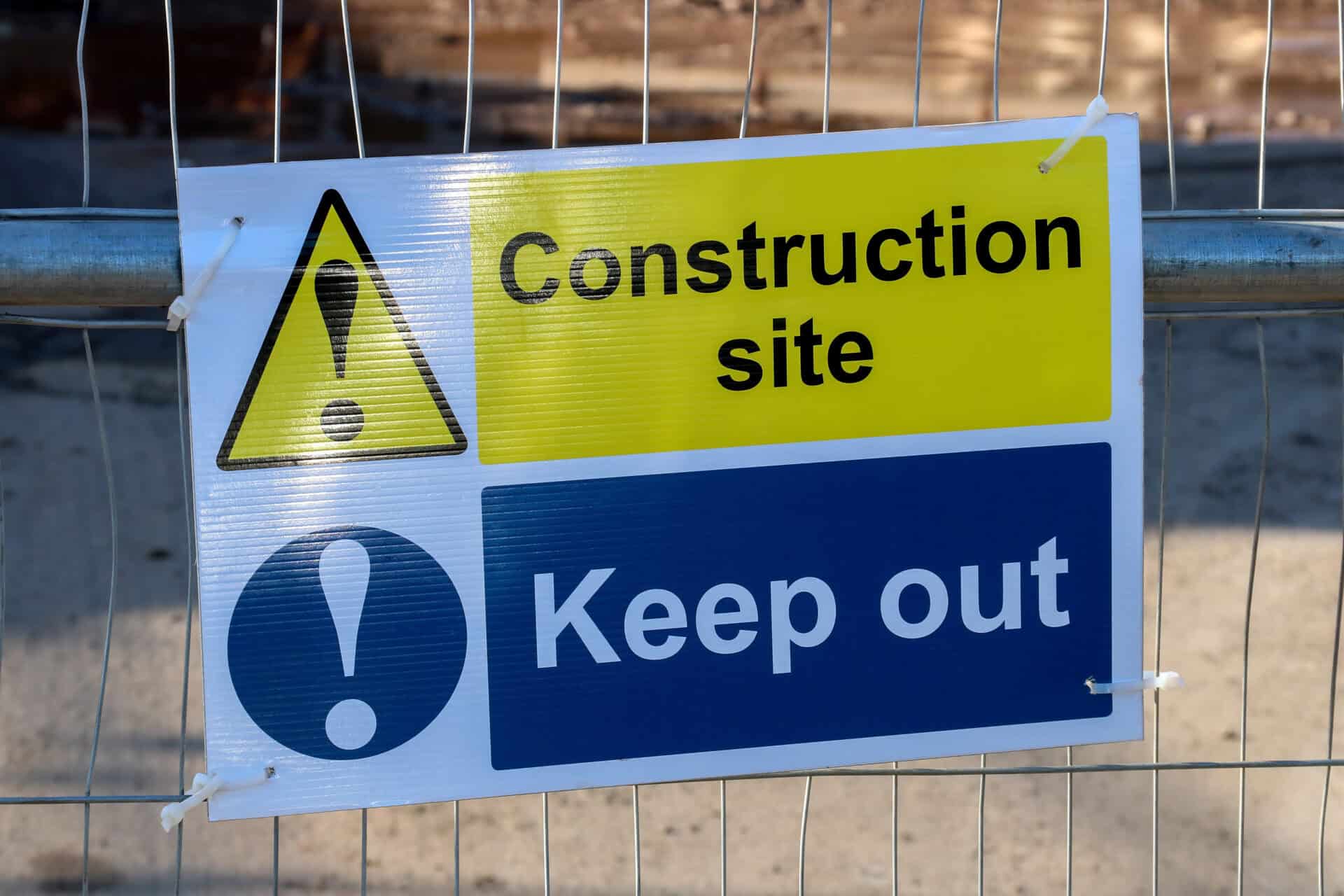
Use a flexible banner where a large graphic needs to travel between venues, a poster where a frame or backing already exists, and a rigid board where the print must hold its shape. These are useful starting points. A poster under a covered noticeboard has a different job from a sign at an exposed site, even when both carry the same message.
Before requesting a quote, find out where the display will go, how people will see it and what it can be attached to. Those details help you compare materials and identify costs that can be missed when you look at the price of the print alone.
What Materials Are Commonly Used for Large Format Printing?
Large format print covers everything from shop posters to graphics spanning an exhibition wall. Paper posters are a straightforward choice for framed displays and short indoor campaigns. The frame or backing keeps the graphic flat, and a replacement can slot into the same position. Where the frame has a clear cover, check whether reflections at the site affect how the poster reads.
Flexible banner materials include solid PVC, mesh and fabric. These categories differ in how they behave when tensioned, packed or exposed to weather. Mesh has openings that allow some air through, while fabric is often used on indoor display systems. The exact choice depends on the product and its mounting requirements. Before choosing from a banner printing page or catalogue, check which materials and finishing options the supplier can quote for your specific job.
Rigid products include foamed PVC, fluted plastic and aluminium composite panels. Manufacturer display material specifications illustrate the range of sheet materials used for graphics. They vary in weight, stiffness and edge appearance, so the name of the material only gets you part of the way. A lightweight board you carry to an event may have different requirements from a mounted panel intended to stay in position for months. If you already have a holder, tell the printer the maximum panel thickness it accepts as well as the visible opening. A perfectly printed board is difficult to use if it will not slide into the frame.
What Is the Difference Between Flexible Banners and Rigid Printed Boards?
A flexible banner needs a support system to give it shape. Eyelets and ties, a purpose-made frame or a stand may serve different applications. Find out which system you will use before you finalise the artwork. The fastening or stand can cover part of the graphic, so ask for the visible area and keep important information away from seams, eyelets and edges.

Rigid boards hold their shape when supported appropriately. A flat board can keep a directional arrow or map easier to read than a loose sheet. A portable panel can still be awkward if it is too wide for a lift or car boot. Measure your route from delivery point to display position, including doorways, corners and any storage rack. For a display that spans several panels, decide where the joins will land so a line of type does not cross a gap.
Consider how the graphic will be replaced. A café that changes a window promotion monthly might install a frame once and swap the poster. A community event moving between halls might prefer an existing stand with a replaceable graphic, provided it can hold the proposed material. If a display is used repeatedly, include packing time and protection in your comparison. A roll or sleeve protects a flexible graphic in transit, while rigid panels may need edge protection and flat or otherwise suitable storage. Agree how the product should be packed with its supplier so the same graphic is ready for the next installation.
Which Large Format Materials Suit Indoor and Outdoor Displays?
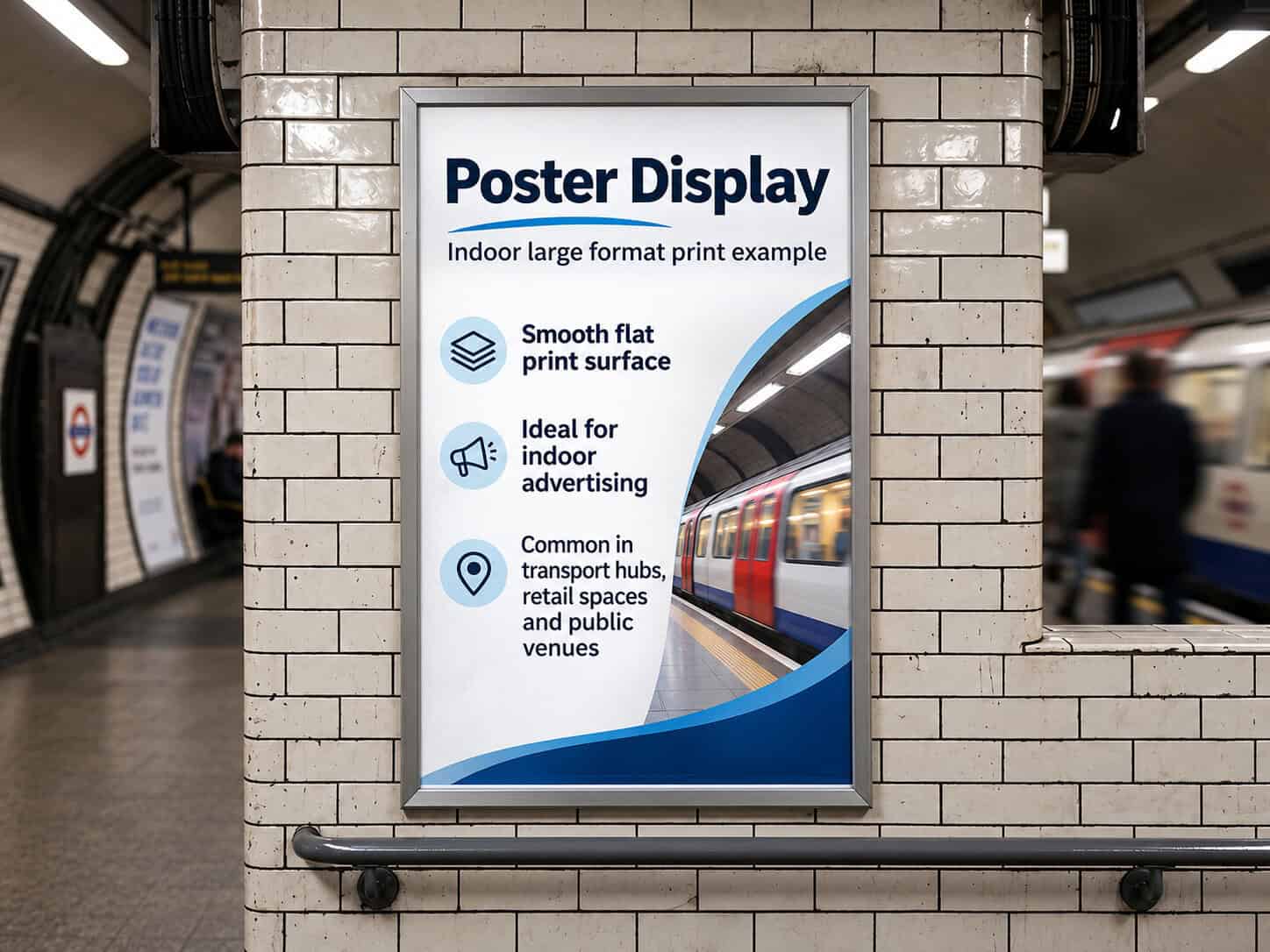
Indoors, start with the surface and lighting. A paper poster in a wall-mounted frame works well when people can stop nearby. A board may suit a foyer where a graphic needs to stay flat and visible from an angle. A fabric graphic may make sense on a compatible frame with a defined method of tensioning. Take a photograph of the empty location before ordering, including overhead lights and nearby glass. This gives the designer a better idea of where reflections or other displays could interfere.
Outdoors, moisture, sunlight, temperature and wind matter. A weather-suitable print surface is one part of the specification. The mounting, supporting structure and exposure also affect whether a display is appropriate. Discuss the location and fixing method with the venue or responsible installer, especially if the display will be exposed to wind. Mesh may be an option to discuss, but the suitability of the whole installation needs to be assessed separately.
If you are comparing outdoor signage with a temporary banner, describe the likely time in place and who will take responsibility for inspection and removal. Replacing a short-term promotion on an existing frame is a different job from setting up a new sign on a wall. Tell the supplier if the display is under cover, near a road or at a height that makes it hard to reach. A specific description of the site helps the supplier identify which questions to resolve with you and the venue before print.
How Does Viewing Distance Affect Large Format Print Choices?
Design for the point where readers first need to understand the display. A pedestrian who can stop beside a poster can read an event schedule. Someone approaching an entrance from across a car park needs the name of the venue and a clear arrow much earlier. Put the most important message where it can be seen from that first decision point. If people need details after they arrive, use a second panel or handout close to where they will stop.
A cheap test is to print the main headline at intended size on several sheets and tape them together. View it from roughly the distance and angle that visitors will have. Check it again with the stand, window ledge or counter at its proposed height. If people can see the headline but miss the arrow, increasing the arrow and moving it clear of the text may improve the result more than enlarging everything.
Photographs and logos need their own check. An image that looks sharp on a phone may look soft across a large panel. Ask the printer what image quality they need at the final size and viewing distance, and send an original file where possible. A vector logo usually scales cleanly because its outlines are described by paths. A small logo copied from a website may be a raster image with too few pixels for the same job. Confirm the artwork dimensions and scale before spending time rebuilding the design.
How Do Durability and Display Conditions Affect Material Choice?
Decide how long the display must remain useful and how often it will be handled. A one-off poster that stays behind glass can have a simpler specification than a board moved between a warehouse and a van every weekend. If an indoor display will be wiped regularly, share the proposed cleaning method. Check which material, print surface and cleaning routine the supplier recommends for that combination.
Think about what happens when the message expires. A replaceable poster or insert can let you reuse a stand or frame, while an individually printed board may be easier to place wherever the audience needs it. Compare the whole job, including replacement graphics, storage, installation and disposal. For a travelling display, include the weight of the support system when deciding what one person can carry.
Make the final brief useful to everyone working on the job. Record the finished dimensions, visible area, expected viewing distance, display period, location and existing hardware. Include a photo or dimensioned sketch where the mounting is unusual. If some of the details are still open, mark them clearly so nobody has to infer them from the artwork. When speaking to King Print, lead with how and where the graphic will be used. That gives the team something concrete to work from when discussing the print options for your display.